
Think Learn Act
  • Home
  • About
    • About
    • Education Blog
    • Writing Blog
  • Case Studies
  • Courses
  • HSIE Resources
    • HSC Business Studies >
      • Operations >
        • Role of operations management
        • Influences
        • Processes (overview) >
          • Inputs
          • Transformation processes
          • Outputs
        • Strategies
      • Marketing >
        • Role of marketing
        • Influences
        • Process
        • Strategies
      • Finance >
        • Role of Financial Management
        • Influences
        • Processes
        • Strategies
      • Human Resources >
        • Role of human resource management
        • Influences
        • Processes
        • Strategies
        • Effectiveness
    • Preliminary Business Studies >
      • Nature of Business >
        • Role of business
        • Types of businesses
        • Influences
        • Business growth and decline
      • Business Management >
        • Nature of management
        • Management approaches
        • Management process
        • Management and change
      • Business Planning >
        • SMEs
        • Influences
        • Business Planning Process
        • Critical Issues
    • Economics >
      • Introduction to Economics >
        • The nature of economics
        • The operation of an economy
      • Consumers and Businesses >
        • Businesses
      • Markets >
        • Demand
        • Supply
        • Market equilibrium
        • Market structures
      • Labour Market >
        • Demand and supply of labour
        • Labour market trends
      • Economic Issues >
        • Economic growth
        • Unemployment
        • Inflation
        • External Stability
        • Distribution of Income and Wealth
        • Environmental Sustainability
    • Society and Culture >
      • Course Framework
      • Research Methods
      • P1: Social and Cultural World
      • P2 Personal and Social Identity
      • P3: Intercultural Communication
      • PIP
      • H1: Social and Cultural Continuity and Change
      • H2: Popular Culture - Social Media
      • H3: Equality and Difference
    • Geography (old syllabus) >
      • Coastal Management
      • Urban Growth and Decline
      • Human Rights
  • Contact

TOPIC 1: INTRODUCTION OF ECONOMICS

The Nature of Economics

  • the economic problem - wants, resources, scarcity
  • the need for choice by individuals and society
  • opportunity cost and its application through production possibility frontiers (PPFs)
  • future implications of current choices by individuals, businesses and governments
  • economic factors underlying decision-making by:
    - individuals: spending, saving, work, education, retirement, voting and participation in the political process
    - business: pricing, production, resource use, industrial relations
    - governments: influencing the decisions of individuals and business
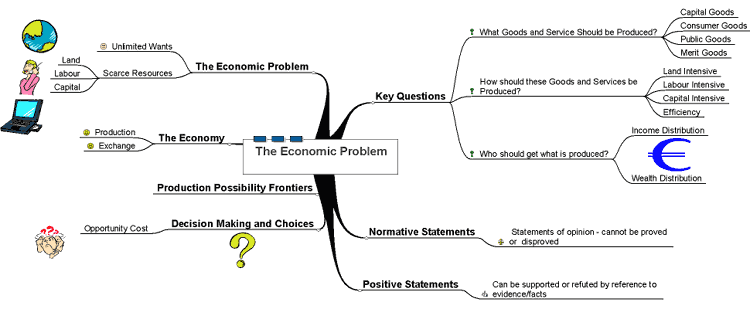
Picture

The Economic Problem

Source: http://www.bized.co.uk/educators/16-19/economics/micro/presentation/econintro_map.htm
WATCH the following video clips

Opportunity Cost and
​Production Possibility Frontiers (PPFs)

WATCH the following video clips about the PPC
NOTE: In HSC Economics we refer to this graph as the Production Possibility Frontier (PPF)
READ through the following websites:
  • Economics Basics: Production Possibility Frontier, Growth, Opportunity Cost and Trade (Investopedia)
  • The Production Possibility Frontier (netmba)
PLAY: The Desert Island Trading Game
WATCH: Opportunity Cost (YouTube video by mjmfoodie)
READ: The Production Possibility Frontier (mbanet)
WATCH: The two PPC YouTube videos from mjmfoodie below.

Future implications of current choices

WATCH: Consumer and Capital Goods in PPF
THINK about the decisions individuals need to make with limited resources.  For example:
  • study and defer income vs income now
  • number of hours to work vs hours to relax
  • house vs holiday
THINK about the decisions businesses need to make with limited resources.  For example:
  • labour vs capital
  • spend now vs spend later
  • increasing wages (may improve productivity/output) vs not increasing wages (reducing costs)

THINK about the decisions governments need to make with limited resources.  For example:
  • health vs education
  • which industries to support
  • which products to tax


THINK about how government decisions affect individuals and businesses.

COMPLETE the revision worksheet:
2014econintroworksheet.doc
File Size: 69 kb
File Type: doc
Download File

EXTENSION: 
Read the following articles:
  • There's no denying it: we're gluttons for punishment
  • How spending money can make you much happier

Think about how rational consumers really are.
Proudly powered by Weebly
  • Home
  • About
    • About
    • Education Blog
    • Writing Blog
  • Case Studies
  • Courses
  • HSIE Resources
    • HSC Business Studies >
      • Operations >
        • Role of operations management
        • Influences
        • Processes (overview) >
          • Inputs
          • Transformation processes
          • Outputs
        • Strategies
      • Marketing >
        • Role of marketing
        • Influences
        • Process
        • Strategies
      • Finance >
        • Role of Financial Management
        • Influences
        • Processes
        • Strategies
      • Human Resources >
        • Role of human resource management
        • Influences
        • Processes
        • Strategies
        • Effectiveness
    • Preliminary Business Studies >
      • Nature of Business >
        • Role of business
        • Types of businesses
        • Influences
        • Business growth and decline
      • Business Management >
        • Nature of management
        • Management approaches
        • Management process
        • Management and change
      • Business Planning >
        • SMEs
        • Influences
        • Business Planning Process
        • Critical Issues
    • Economics >
      • Introduction to Economics >
        • The nature of economics
        • The operation of an economy
      • Consumers and Businesses >
        • Businesses
      • Markets >
        • Demand
        • Supply
        • Market equilibrium
        • Market structures
      • Labour Market >
        • Demand and supply of labour
        • Labour market trends
      • Economic Issues >
        • Economic growth
        • Unemployment
        • Inflation
        • External Stability
        • Distribution of Income and Wealth
        • Environmental Sustainability
    • Society and Culture >
      • Course Framework
      • Research Methods
      • P1: Social and Cultural World
      • P2 Personal and Social Identity
      • P3: Intercultural Communication
      • PIP
      • H1: Social and Cultural Continuity and Change
      • H2: Popular Culture - Social Media
      • H3: Equality and Difference
    • Geography (old syllabus) >
      • Coastal Management
      • Urban Growth and Decline
      • Human Rights
  • Contact