
Think Learn Act
  • Home
  • About
    • About
    • Education Blog
    • Writing Blog
  • Case Studies
  • Courses
  • HSIE Resources
    • HSC Business Studies >
      • Operations >
        • Role of operations management
        • Influences
        • Processes (overview) >
          • Inputs
          • Transformation processes
          • Outputs
        • Strategies
      • Marketing >
        • Role of marketing
        • Influences
        • Process
        • Strategies
      • Finance >
        • Role of Financial Management
        • Influences
        • Processes
        • Strategies
      • Human Resources >
        • Role of human resource management
        • Influences
        • Processes
        • Strategies
        • Effectiveness
    • Preliminary Business Studies >
      • Nature of Business >
        • Role of business
        • Types of businesses
        • Influences
        • Business growth and decline
      • Business Management >
        • Nature of management
        • Management approaches
        • Management process
        • Management and change
      • Business Planning >
        • SMEs
        • Influences
        • Business Planning Process
        • Critical Issues
    • Economics >
      • Introduction to Economics >
        • The nature of economics
        • The operation of an economy
      • Consumers and Businesses >
        • Businesses
      • Markets >
        • Demand
        • Supply
        • Market equilibrium
        • Market structures
      • Labour Market >
        • Demand and supply of labour
        • Labour market trends
      • Economic Issues >
        • Economic growth
        • Unemployment
        • Inflation
        • External Stability
        • Distribution of Income and Wealth
        • Environmental Sustainability
    • Society and Culture >
      • Course Framework
      • Research Methods
      • P1: Social and Cultural World
      • P2 Personal and Social Identity
      • P3: Intercultural Communication
      • PIP
      • H1: Social and Cultural Continuity and Change
      • H2: Popular Culture - Social Media
      • H3: Equality and Difference
    • Geography (old syllabus) >
      • Coastal Management
      • Urban Growth and Decline
      • Human Rights
  • Contact

TOPIC 3: BUSINESS PLANNING

SMEs
Influences
Planning Process
Critical Issues


​Small to medium enterprises

  • definition
  • role
  • economic contribution
  • success and/or failure (see critical issues)

Definition and Role of SMEs

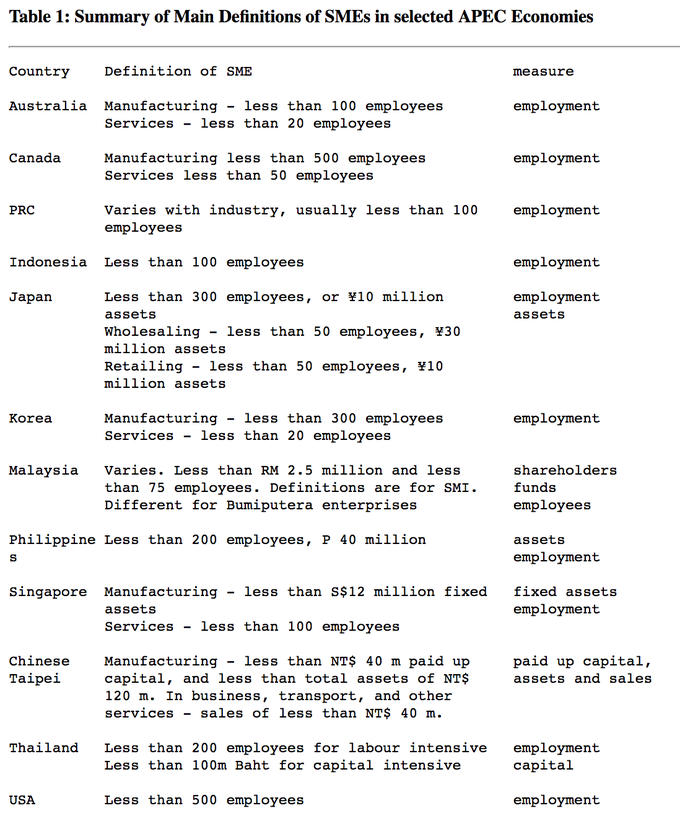
Small-Medium Enterprises tend to be private companies and unincorporated businesses (eg partnerships and sole traders). The owners are usually also the hands-on managers, making the day-to-day decisions for the business.  Formal definitions of SMEs vary country to country and even from institution to institution with countries. The table below shows the different SME definitions for APEC economies (www.apec.org.au/docs/iss1.htm).
Picture
At the beginning of this course, right at the start of Topic 1, it was said that businesses involve the following:
  • profit
  • employment
  • incomes
  • choice
  • innovation
  • entrepreneurship and risk
  • wealth and quality of life
This list also applies to SMEs.  

​According to the Cambridge Preliminary Business Studies textbook (p.169):
  • 8.4% of SMEs are in Agriculture
  • 14% of SMEs are in Service and Construction
  • 80% of Construction employees are with SMEs
  • SMEs tend to be more labour intensive than larger businesses due to the expense of large equipment and machinery
  • Changes in the economy have a greater impact on SMEs than larger businesses
  • About 99.7% of all businesses in Australia are SMEs
  • Two thirds (2/3) of theses businesses have no employees

Economic contribution of SMEs

  •  46-57% contribution to GDP
  •  Generate profits
  •  Profits are taxed which the government returns to the economy
  •  Export goods and services
  •  Provide employment
  •  Provide opportunities for entrepreneurs and innovators
  •  Provide new goods and services that improve living standards

TASK
: Write a 300-500 word newspaper article or produce a slide show about the importance of SMEs to the Australian Economy.  You may want to consult with students who are studying Economics to help you.

Success and/or failure

READ: Why Small Businesses Fail in Australia (The Huffington Post) and Reasons for Small Business Success (Chron)
TASK: Outline the factors that lead to the success or failure of an SME.

The critical issues that determine success or failure will be examined in further detail later.
Influences
Proudly powered by Weebly
  • Home
  • About
    • About
    • Education Blog
    • Writing Blog
  • Case Studies
  • Courses
  • HSIE Resources
    • HSC Business Studies >
      • Operations >
        • Role of operations management
        • Influences
        • Processes (overview) >
          • Inputs
          • Transformation processes
          • Outputs
        • Strategies
      • Marketing >
        • Role of marketing
        • Influences
        • Process
        • Strategies
      • Finance >
        • Role of Financial Management
        • Influences
        • Processes
        • Strategies
      • Human Resources >
        • Role of human resource management
        • Influences
        • Processes
        • Strategies
        • Effectiveness
    • Preliminary Business Studies >
      • Nature of Business >
        • Role of business
        • Types of businesses
        • Influences
        • Business growth and decline
      • Business Management >
        • Nature of management
        • Management approaches
        • Management process
        • Management and change
      • Business Planning >
        • SMEs
        • Influences
        • Business Planning Process
        • Critical Issues
    • Economics >
      • Introduction to Economics >
        • The nature of economics
        • The operation of an economy
      • Consumers and Businesses >
        • Businesses
      • Markets >
        • Demand
        • Supply
        • Market equilibrium
        • Market structures
      • Labour Market >
        • Demand and supply of labour
        • Labour market trends
      • Economic Issues >
        • Economic growth
        • Unemployment
        • Inflation
        • External Stability
        • Distribution of Income and Wealth
        • Environmental Sustainability
    • Society and Culture >
      • Course Framework
      • Research Methods
      • P1: Social and Cultural World
      • P2 Personal and Social Identity
      • P3: Intercultural Communication
      • PIP
      • H1: Social and Cultural Continuity and Change
      • H2: Popular Culture - Social Media
      • H3: Equality and Difference
    • Geography (old syllabus) >
      • Coastal Management
      • Urban Growth and Decline
      • Human Rights
  • Contact